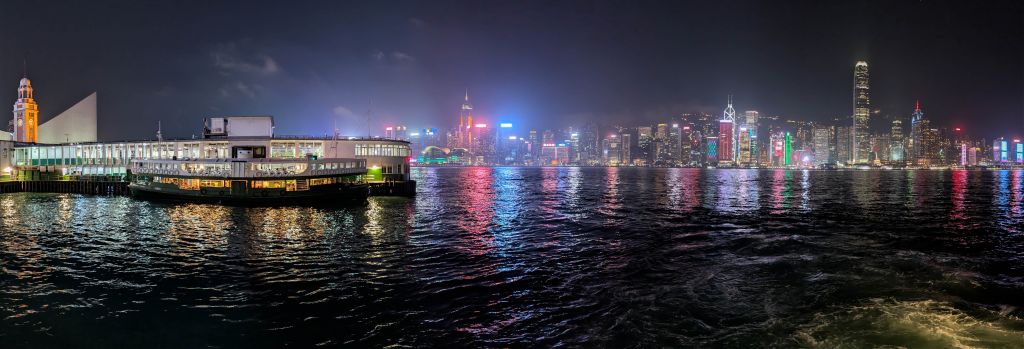
Hong Kong is divided into three administrative areas: Hong Kong Island, Kowloon, and New Territories. Hong Kong’s amazing skyline, put on display during the nightly 8:00pm Symphony of Lights show across the Victoria Harbour, is made up of the buildings in the commercial areas of the north part of Hong Kong Island. We spent about two days meandering our way through some of these neighborhoods focusing on getting lost in the local streets, straining our necks to look up at the amazingly artful apartment towers, and eating all day along the way. We didn’t have the fifteen stomachs needed to eat everything we’d researched prior to the trip, but each neighborhood has its own “bucket list” for your planning and for my next trip!
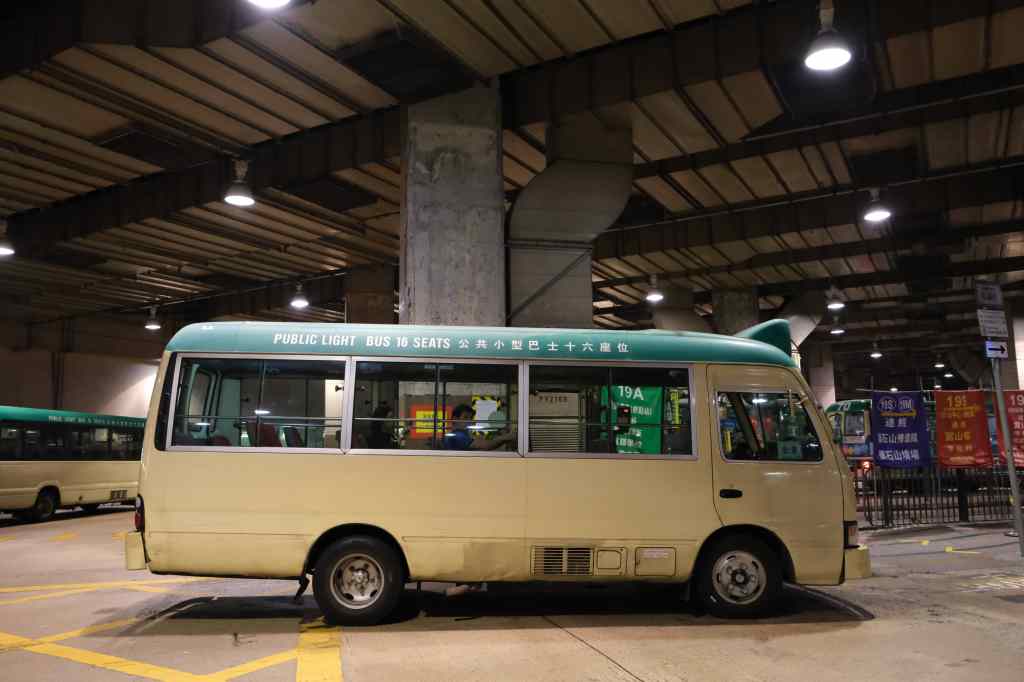
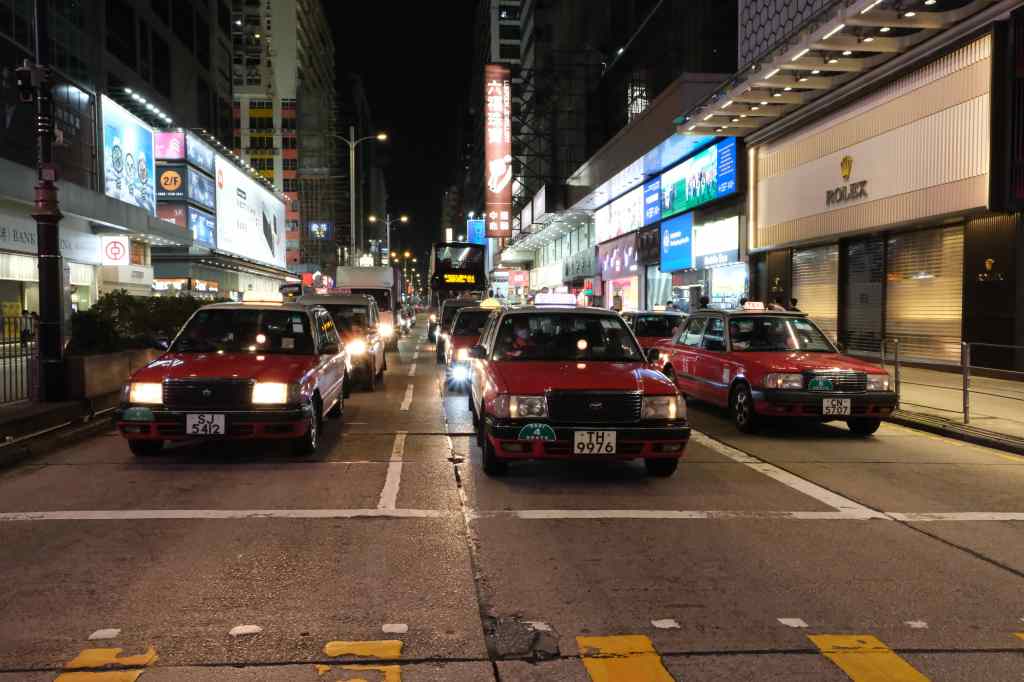
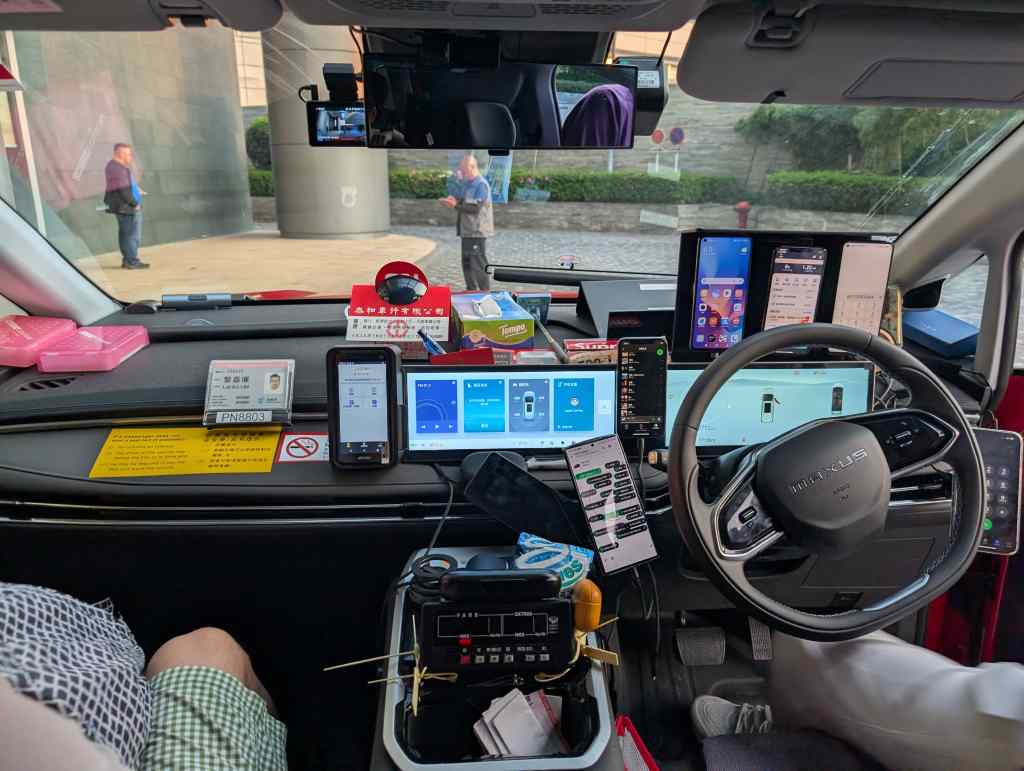
Hong Kong has done a beautiful job winning the public transportation game. Offering MTR subways, double-decker buses, mini “light” buses, trolleys, ferries, and of course the picturesque red private taxis, you can get anywhere and everywhere you’d like. We lived on the Kowloon side, but could easily reach Hong Kong Island via MTR or ferry.
Monster Building, Quarry Bay
Location pin for Monster Building here.
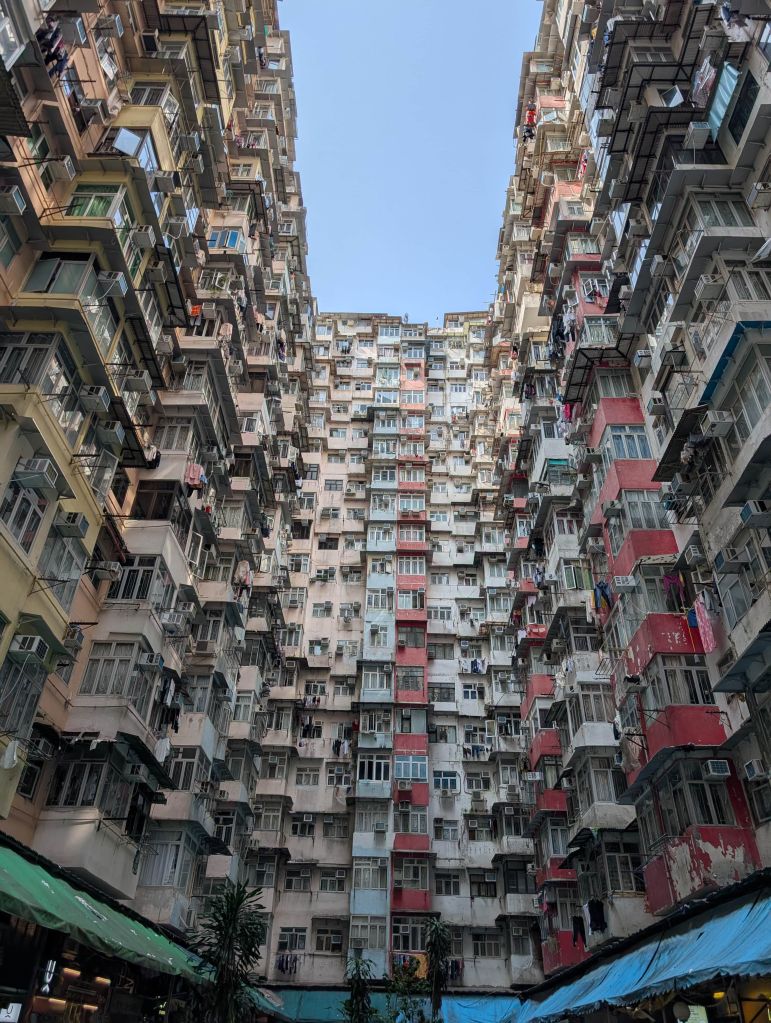
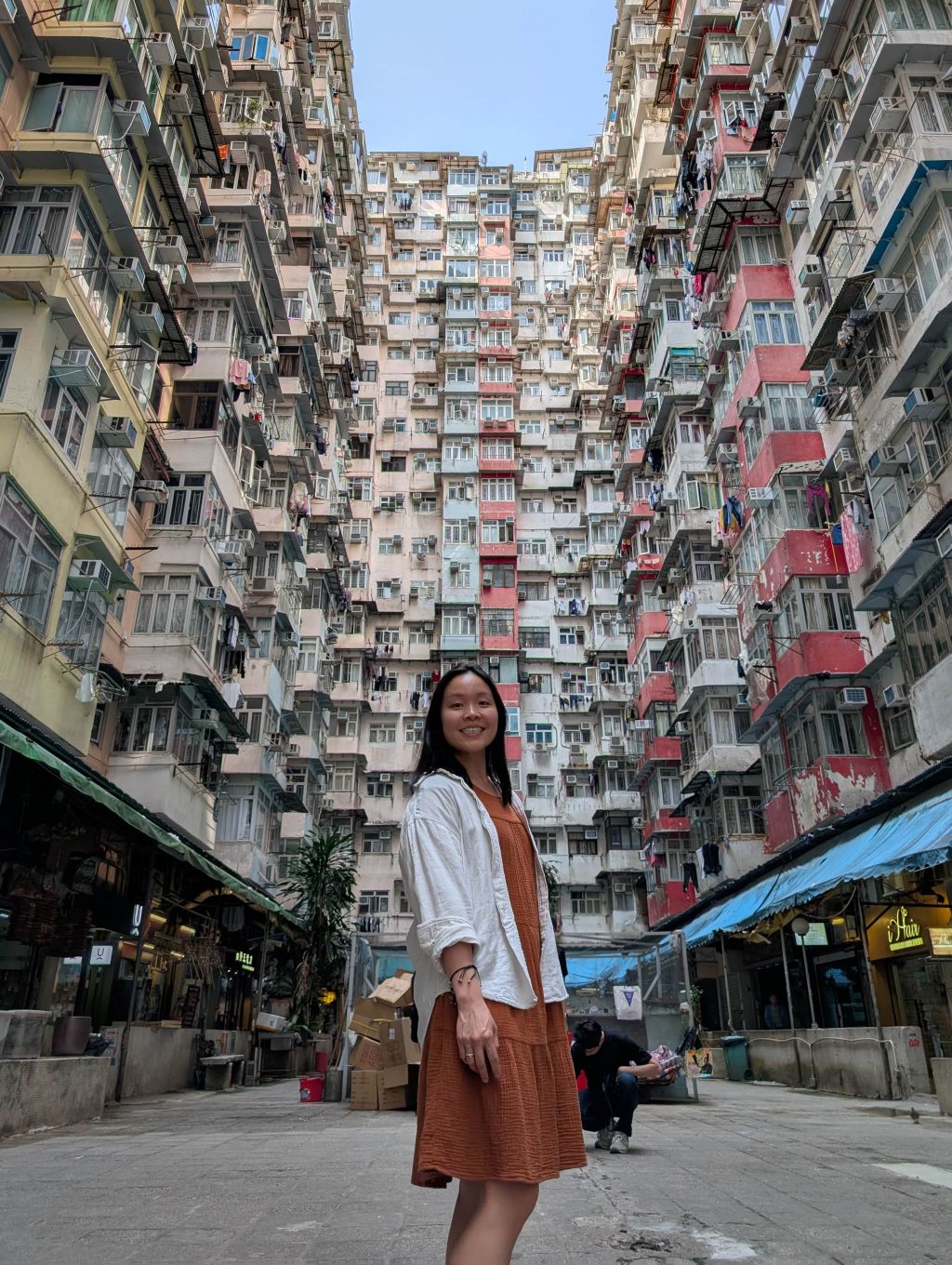
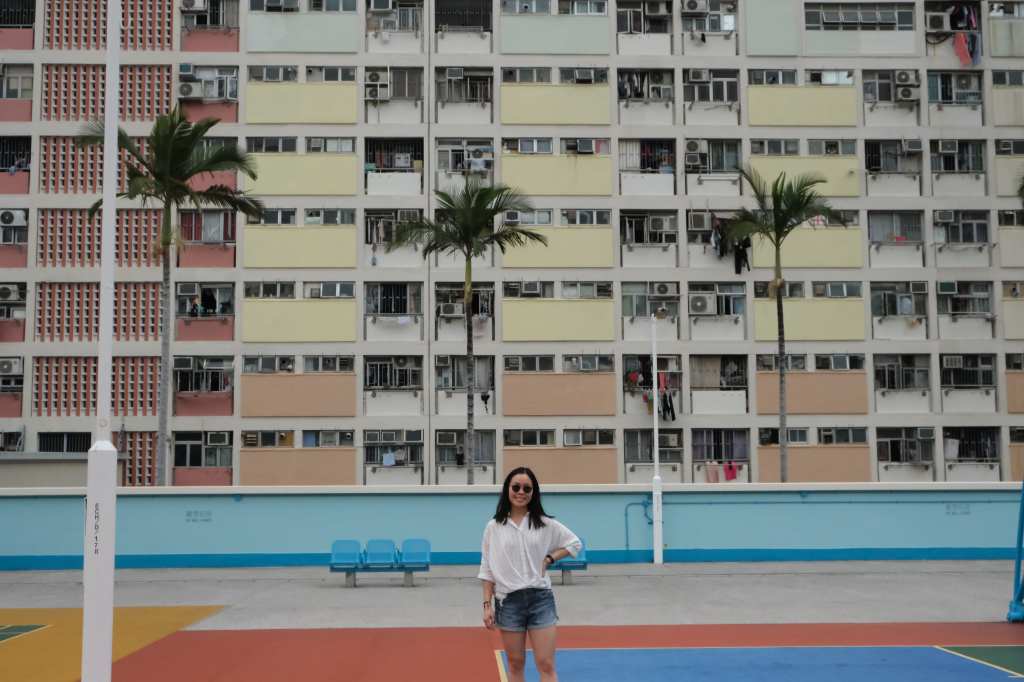
Planning to traverse Hong Kong Island’s northern neighborhoods from east to west, we began in Quarry Bay. One of the most Insta-famous parts of Quarry Bay is the Yick Cheong Building, a public housing concrete giant nicknamed the “Monster Building.” The Monster Building is actually a group of 5 different buildings within the same complex, in closely spaced formation but leaving space for two courtyards. This residential complex has become a popular spot for photography and influencer visits, and was also featured in the 2014 movie Transformers: The Age of Extinction.
The Monster Building public housing towers were initially intended to provided low-income housing to Hong Kong residents. The residences were built in the 1960’s to help alleviate the 1950’s-1960’s severe housing shortage as a large influx of people escaped the political chaos of mainland China and moved to Hong Kong.
Visiting the Monster Building in 2025, the atmosphere is very serene and subdued. Standing in the ground level courtyard makes you feel so small. You’re fully surrounded by faded but still colorful towering apartment building giants, their windows sporting air conditioning units and rods of clothes flapping gently as they dried in the wind. The sheer density of the apartment unit balconies is staggering. The surrounding sounds of other people moving about are somehow muted and the air feels still and cool, in the deep shade of the concrete giants. It reminded me of the cool stillness of hiking beneath a rainforest canopy, except of course this time we were surrounded by concrete giants rather than redwoods or sequoias. It was strikingly, almost hauntingly, beautiful.
The Yick Cheong Building apartment complex includes over 2,200 units, reportedly housing about 10,000 residents. Keep in mind that despite their current fame, these buildings are still residential buildings and people actually live there, so be respectful during your visit.
Quarry Bay Bucket List
- Yick Cheong Building – dense apartments
- Sun Kwai Heung (actually in Chai Wan a bit further east) – BBQ roast pork bun
- Jinjin Cha Caan Teng Restaurant – local restaurant known for salt baked chicken
Ding Ding Hong Kong Tram
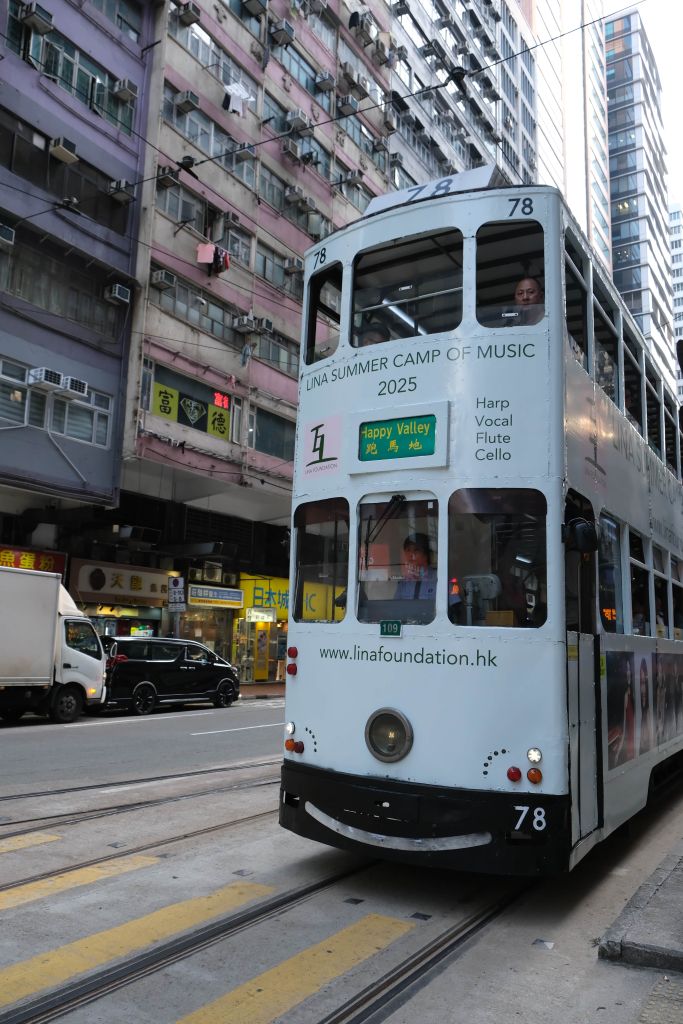
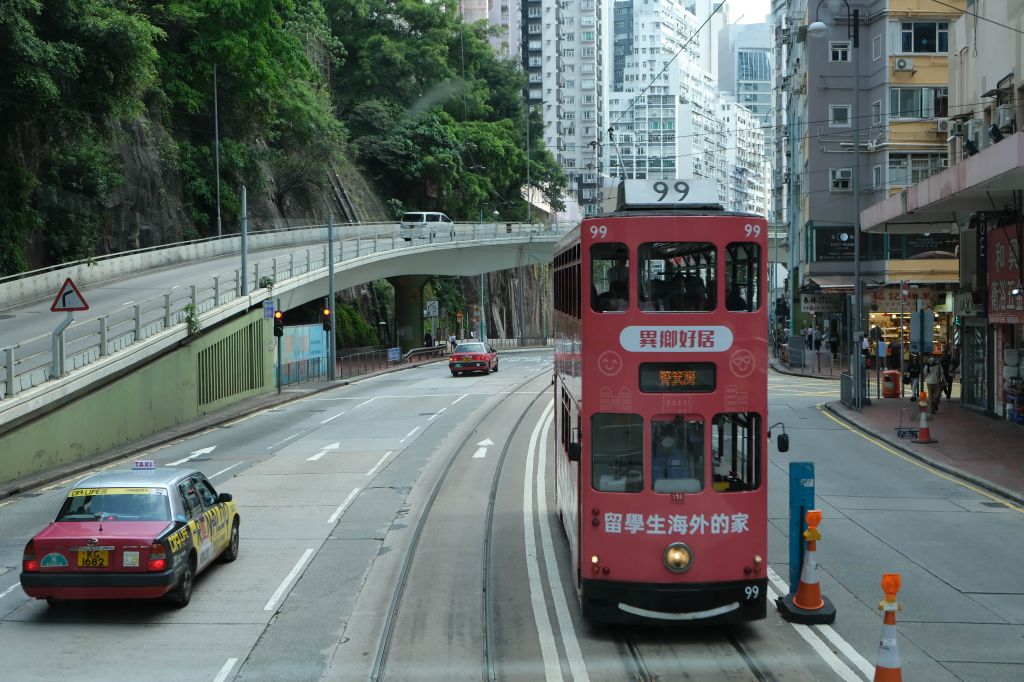
To travel westward across Hong Kong Island, we then boarded another uniquely Hong Kong version of public transportation, the Hong Kong Tram otherwise lovingly referred to by locals as “Ding Ding.” These double-deckered, open-air trams are a fun and local way to navigate to popular tourist areas on Hong Kong Island like Causeway Bay, Wan Chai, Sheung Wan, and Central. The Hong Kong Tram, costing adults only $3 HKD at a fixed rate, runs east and west between terminal station Kennedy Town to the west and Shau Kei Wan to the east. The Tram has been running since 1904 when it was Hong Kong’s first large-scale transportation system. Now with 165 tramcars, the Hong Kong Tramways system holds the Guinness World Record for “the largest double-decker tram fleet in service.”
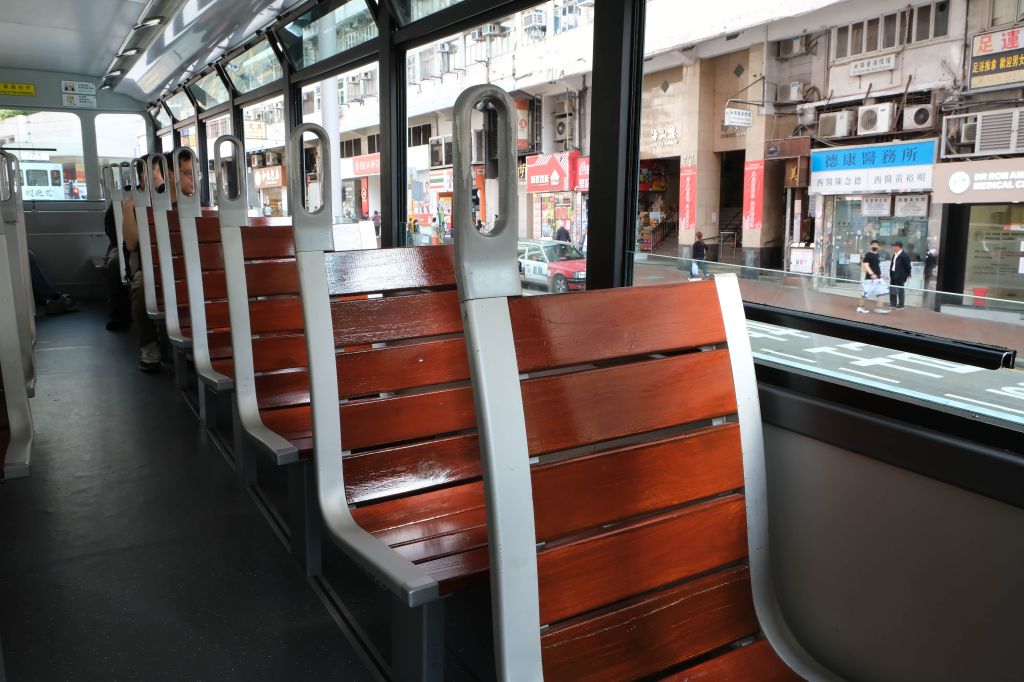
The tram is where tourists can mix with locals, whether that be office workers getting off of work for the day or school children still in their uniforms. While I loved taking the tram for the experience, it’s not the fastest way to get from Point A to Point B by any means due to the frequent number of stops and the need for the tram to obey traffic laws on the streets shared by passenger cars and buses. We used the Hong Kong Tram to get from Quarry Bay to Causeway Bay.
Teatime, Causeway Bay
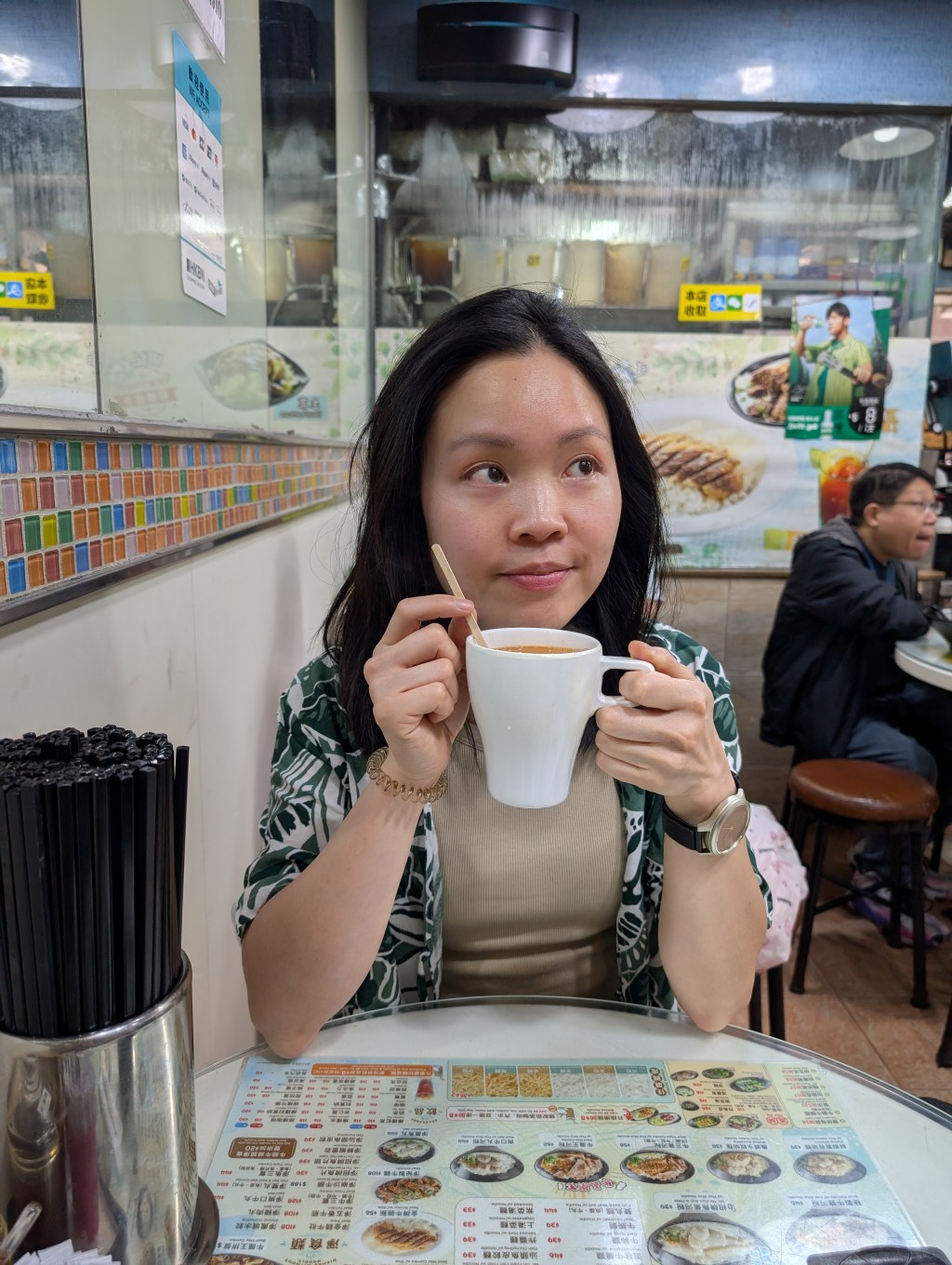
Causeway Bay is home to Fashion Walk which we walked around to window shop but didn’t spend too much time at. At this point in the afternoon, we were looking forward to tea time! Afternoon teatime in Hong Kong, typically a separate and special menu of smaller but supremely tasty options served up with a refreshing (usually tea-based) beverage, has grown into its own entire dining culture. Hong Kong style cafes and larger restaurants alike serve “teatime” menus and we were glad to try a few during our time in Hong Kong!
Cafe Matchbox
57 Paterson St, Causeway Bay, Hong Kong
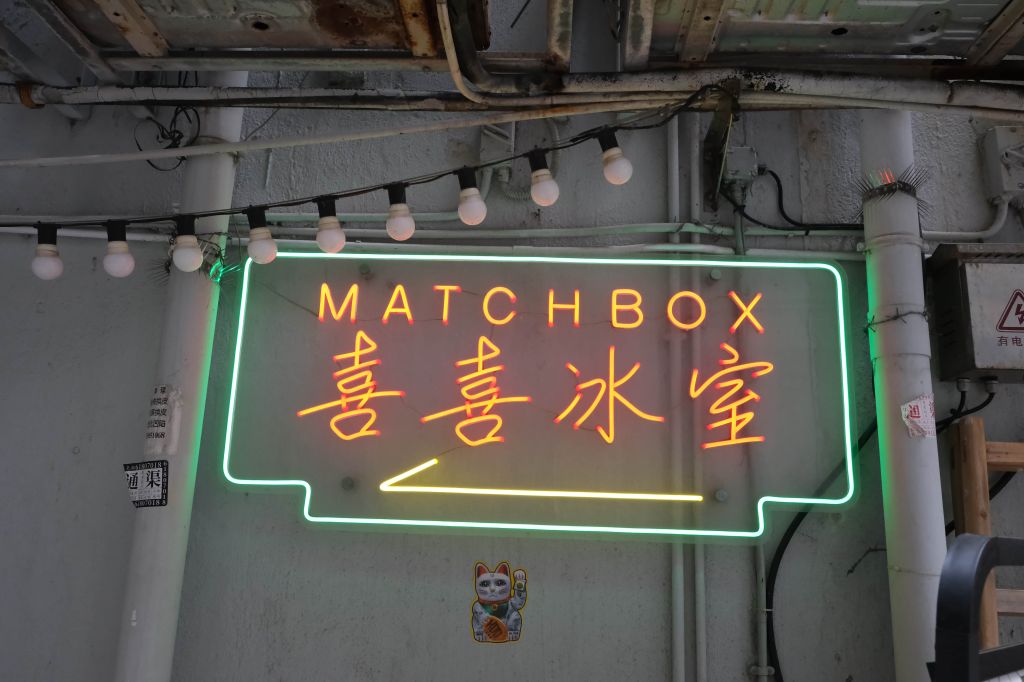
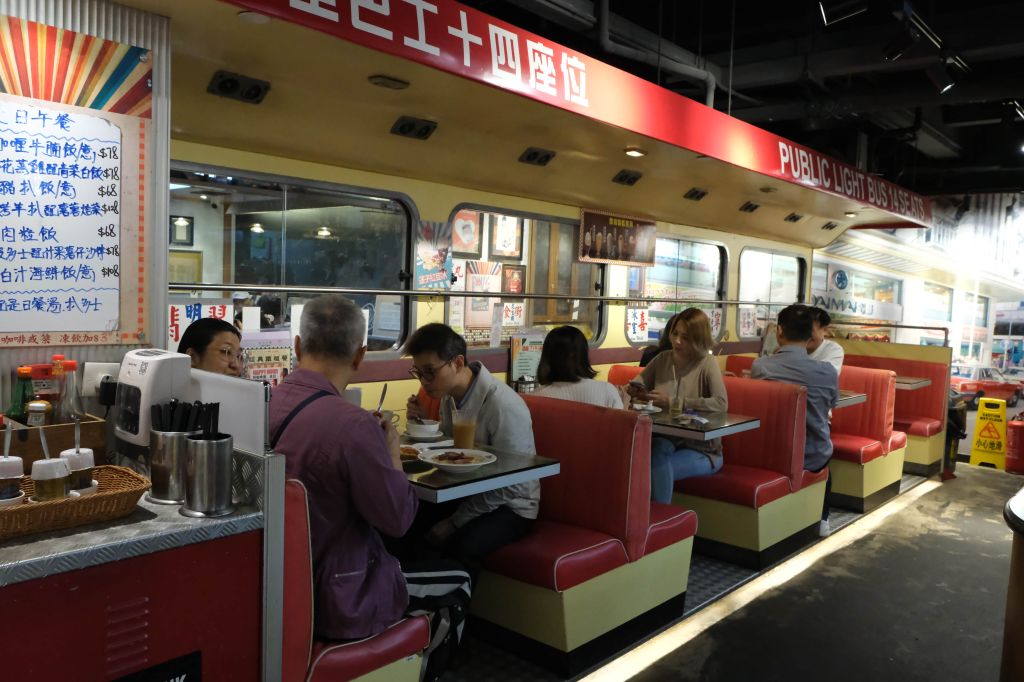
We spent our teatime meal opportunity of our day in Causeway Bay at Café Matchbox. I will say the 1980’s Hong Kong decor, complete with seating in quintessentially adorable mini light bus, outperforms the actual food served in the restaurant. But the decor does not disappoint. I’d go to Cafe Matchbox probably once to experience it, and only once.

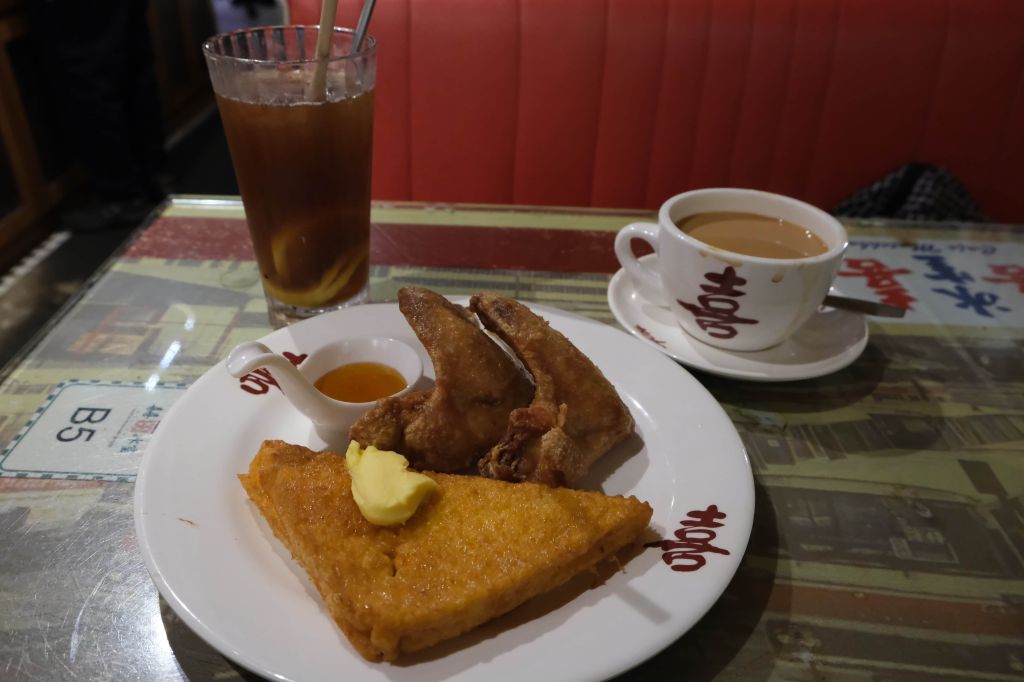
Café Matchbox boasts an immersive, intentionally retro aesthetic with old posters and newspapers framed on the walls and customer seating in booths within the shell of a classic Hong Kong public minibus. Ordering off the teatime menu, we tried the french toast and fried chicken wing, washed down with a hot coffee-milk tea combo and an iced lemon tea.
Causeway Bay Bucket List
- Sister Wah Beef Brisket
- Fook Yuen for dessert, tang yuan glutinous rice balls
More Eats, Wan Chai
Keung Kee Sticky Rice
Location pin for Keung Kee here.

Continuing to wander further west heading into Wan Chai, we stopped for a snack at Keung Kee, a snack and dessert spot. Keung Kee has earned its spot on the Michelin guide for many years now. The restaurant is famous for its dish of lo mai fan, glutinous sticky rice perfectly oiled up by Chinese pork sausages and additionally flavored with even more umami from Shiitake mushrooms and green onions. I wasn’t even hungry but could have eaten three bowls of this with no worries. This dish is more than worth its share of your valuable stomach space!
Sam Bat Mai Arrowroot Tea
Location pin for Sam Bat Mai here.
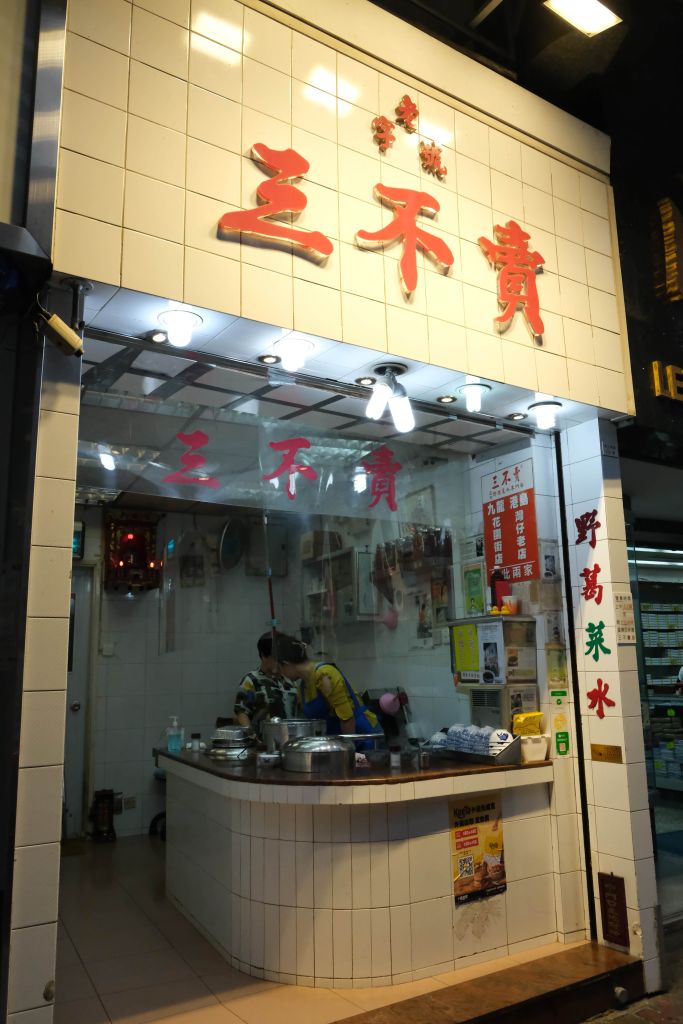

Can you tell Hong Kong is a wonderful place to just wander and eat? Or in this case, drink? Our meandering brought us to Sam Bat Mai, a small streetside stand offering traditional Arrowroot herbal tea. This shop sells only one thing, and has been doing so exclusively since 1948. There is no seating, as this beverage is traditionally enjoyed in a “slurp and go” fashion. The herbal tea can be enjoyed hot in a bowl chugged streetside or taken to-go in a bottle. It was savory and slightly sweet, reminding me of herbal bone broth without the meaty flavor.
Wan Chai Bucket List
- Blue House– a tenement housing building with the “Hong Kong House of Stories” heritage exhibit
- Villain Hitting under the Canal Road Flyover (previously known as Gooseneck Bridge)
- Tai Yuen Street (“Toy Street”) for toys and souvenirs, particularly Hung Hing Toys for collectable toy cars
- Joy Hing Roasted Meat for char siu barbeque pork
- Wong Nai Chung Market and Cooked Food Centre (this is further south in Happy Valley) Shop 1 & 5 for macaroni beef soup
- Cheung Hing Coffee Shop (also in Happy Valley) for classics like Hong Kong style milk tea, egg tart, and pineapple bun
- My Cup Of Tea for Hong Kong style milk tea and toasted egg sandwich
Mid-Levels
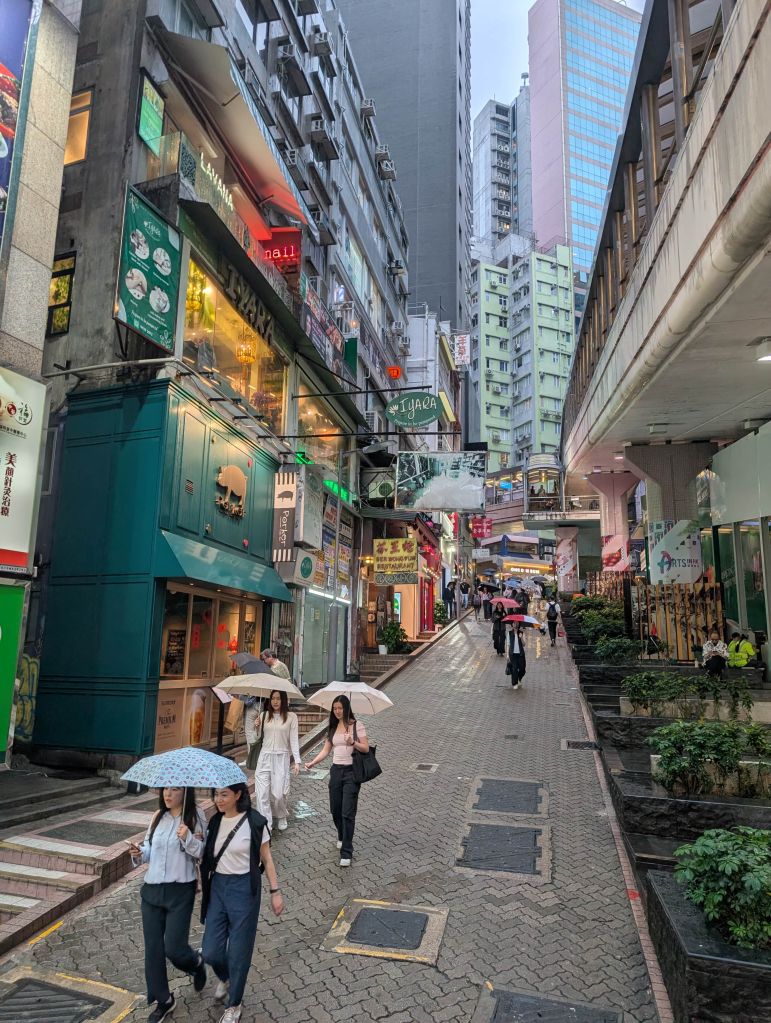
Mid-Levels Escalators

Okay, these escalators and travelators are so fun! Yes, the inclined ones without steps are called travelators while the ones with steps, are of course, escalators. The Mid-Level Escalators connect the area of Central to the Mid-Levels district, and is a prime example of how Hong Kong has mastered the ability to grow upward and use vertical space to expand residential and commercial real estate despite challenging natural terrain. The Mid-Level escalator system stretches 800 meters up and down this hilly area. This network of 16 escalators and 3 travelators is the world’s longest covered outdoor escalator system. The escalators are one-way and run downward during the morning commute (6am to 10am) and are reversed to run upward afterward until midnight.
Egg Tart Face-Off: Bakehouse Vs. Tai Cheong
Location pin for Tai Cheong Bakery here.
Bakehouse has many locations but the pin for the Mid-Levels location is here.
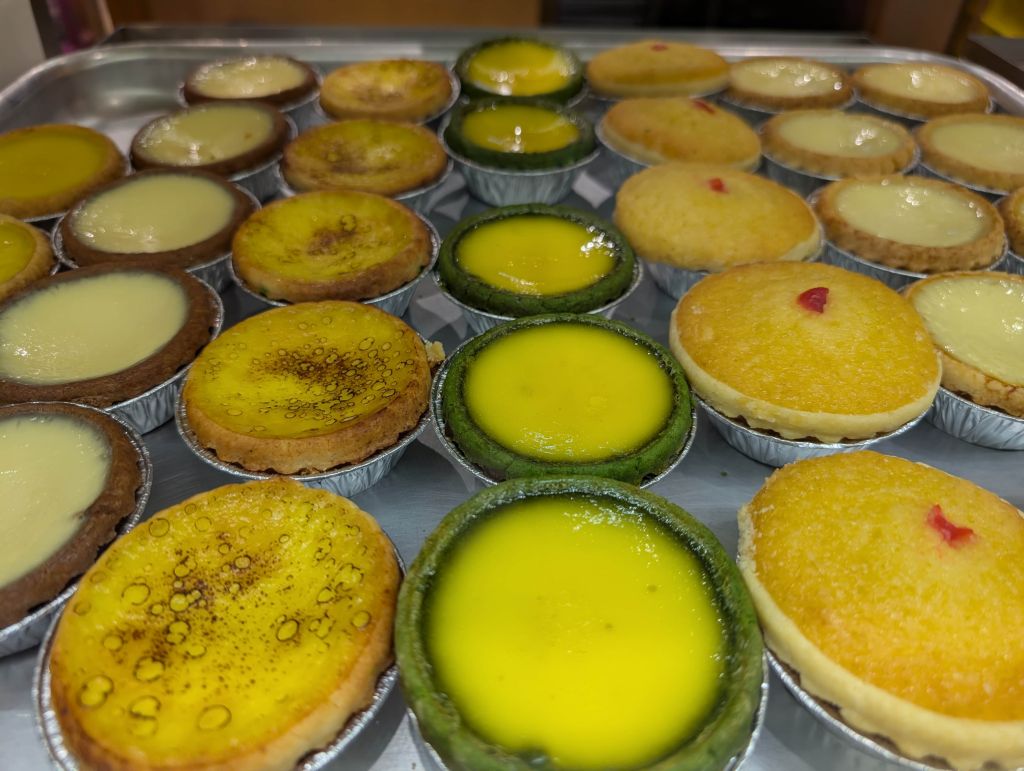
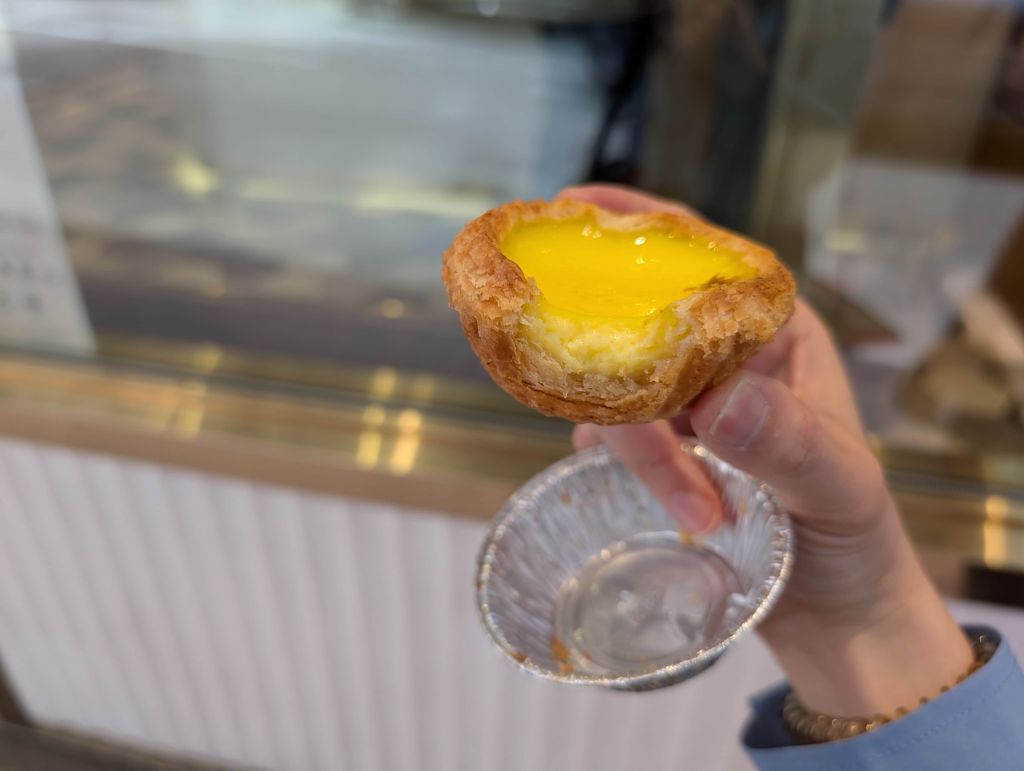
Pop off the travelators for a quick snack break. When in Hong Kong, you must eat (many) egg tarts! I had read about a more modern bakery, Bakehouse, becoming quite popular and we even were turned away the first two times we tried to visit as they had sold out of egg tarts. Third time’s the charm though, and we finally got our hands on their sourdough egg tart. The custard was a little too sweet for my liking and the sourdough flakey crust was good but unfortunately not fresh. I’m sure when fresh out of the oven the crust is amazing.
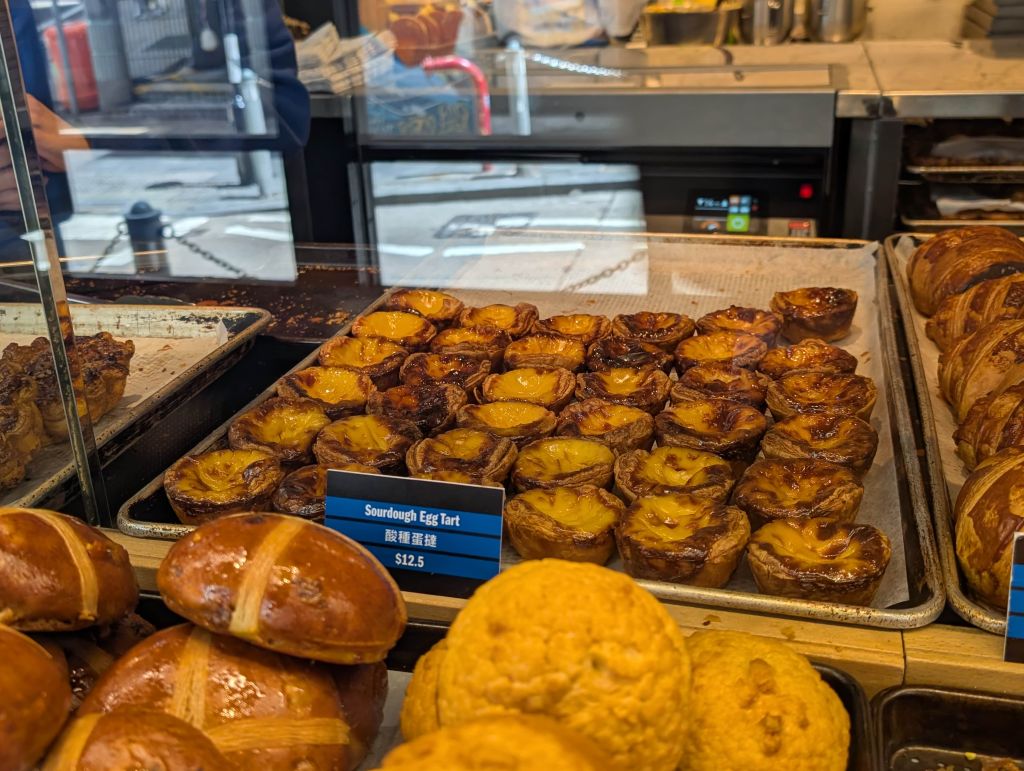

Interested in comparing Bakehouse’s nouveau egg tart to a more traditional one, we walked down the block to Tai Cheong Bakery. This egg tart’s egg custard had a much more traditional texture, and was much less sweet. The puff pastry was very crumbly and extra nutty in flavor.

Barber Shops

The escalators pass through an area full of barber shops and, in the name of lighthearted travel spontaneity, we stopped in for a haircut.
Good Spring Herbal Tea
8 Cochrane St, Central, Hong Kong

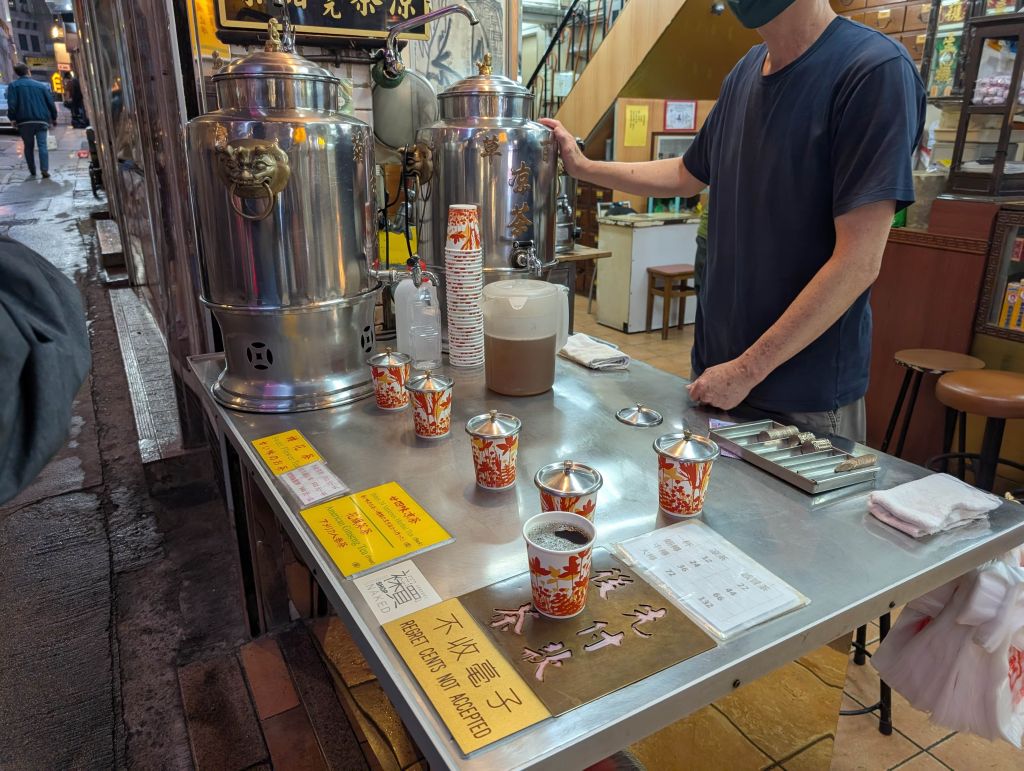
Also stop by Good Spring Herbal Pharmacy for a taste of bitter herbal tea made the traditional way. Open since 1916, they brew up the classic 24-herbs tea.
Central
Central is home to so many good eats and activities it deserved its own post, coming soon!
Unique Smells, Sheung Wan
Wah Hei Building, 130 Jervois St, Sheung Wan, Hong Kong
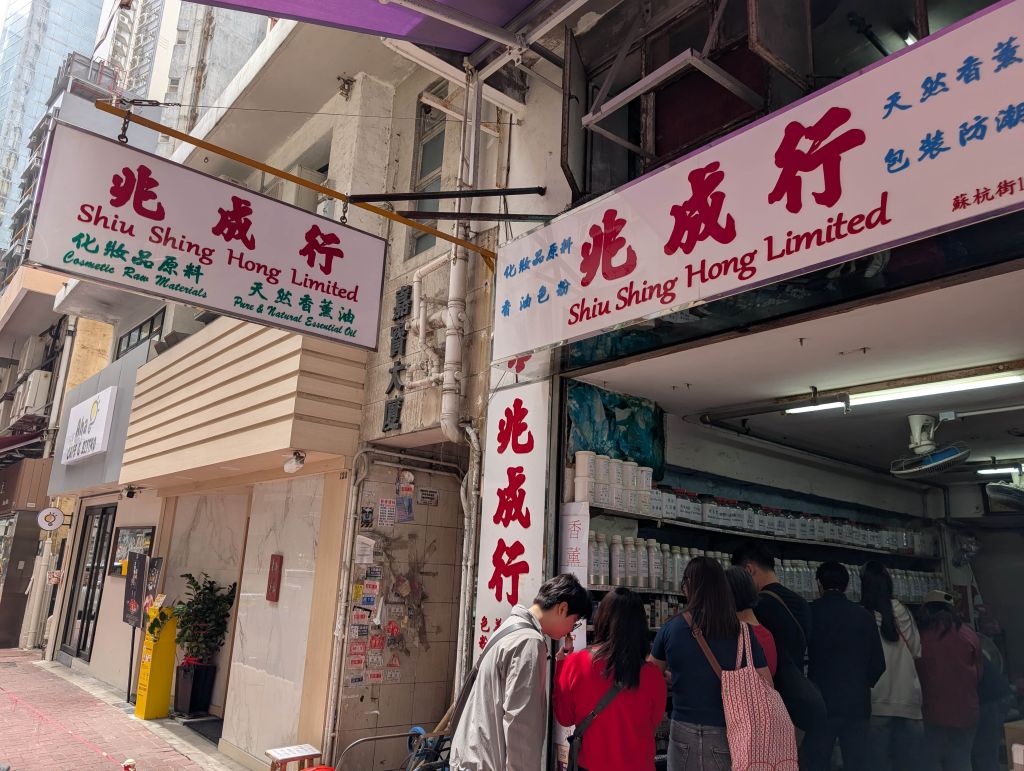
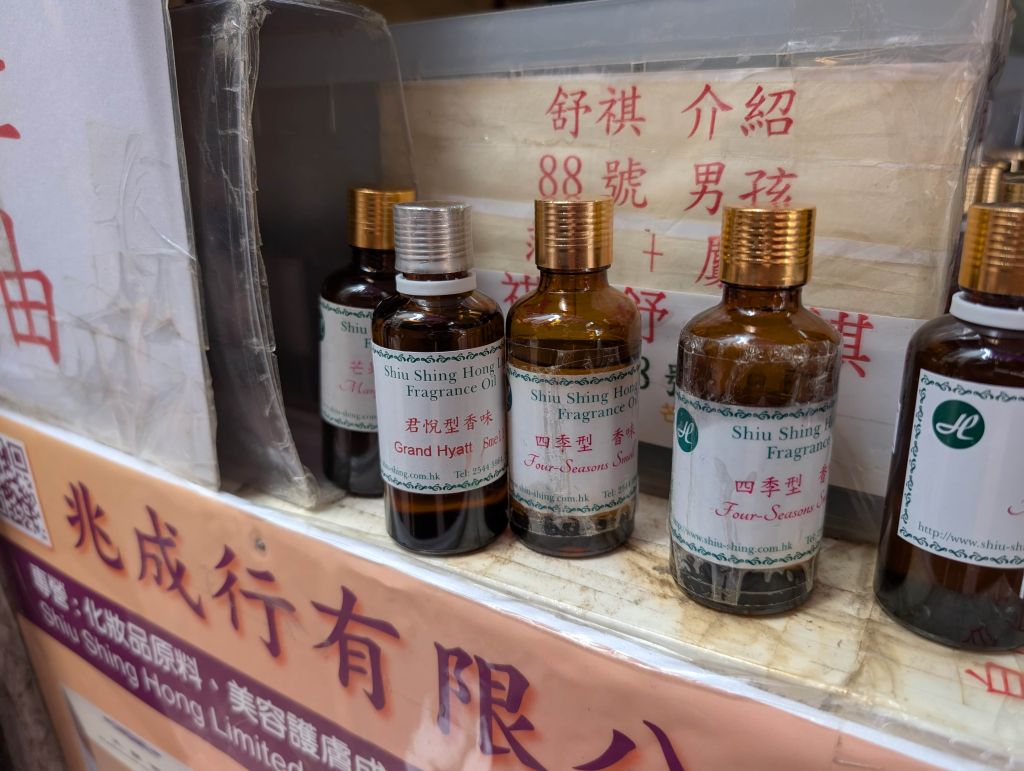
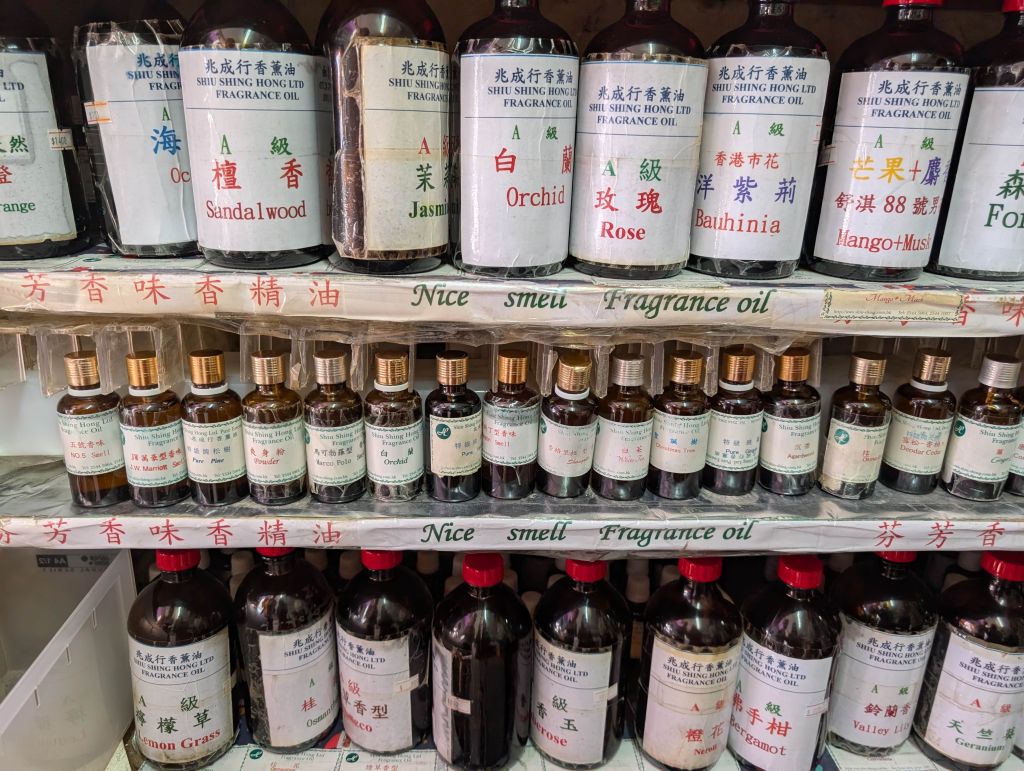
(Not so hidden anymore) **Hidden** gem alert! Essential oil shop Shiu Shing Hong, located in the neighborhood of Sheung Wan, has recently become popular on social media so many tourists line up waiting to get inside. The shop is quite small and can fit around 5-6 customers at a time comfortably. The extensive selection of fragrances offered at Shiu Shing Hong is notable particularly for the oils that replicate the fragrance of various famous places around the world including the Grand Hyatt, Four Seasons, J.W. Marriott, and even the Hong Kong airport.
Sheung Wan Bucket List
- Lin Heung Kui, an iconic dim sum establishment. The original Lin Heung Tea House, founded in 1918 was closed in the post-COVID time of 2022, but the current Lin Heung Kui dim sum restaurant is operated by the same family and still serves dim sum from the classic steam cars.
- Shui Kee Coffee for bottled HK-milk tea and classic HK-style french toast
Star Ferry
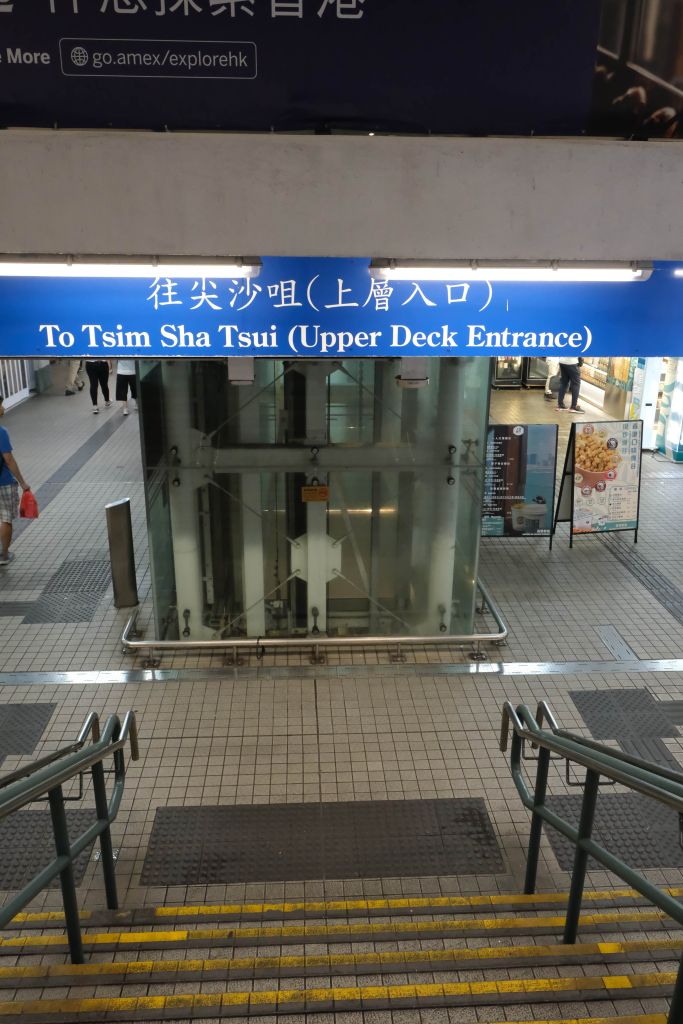
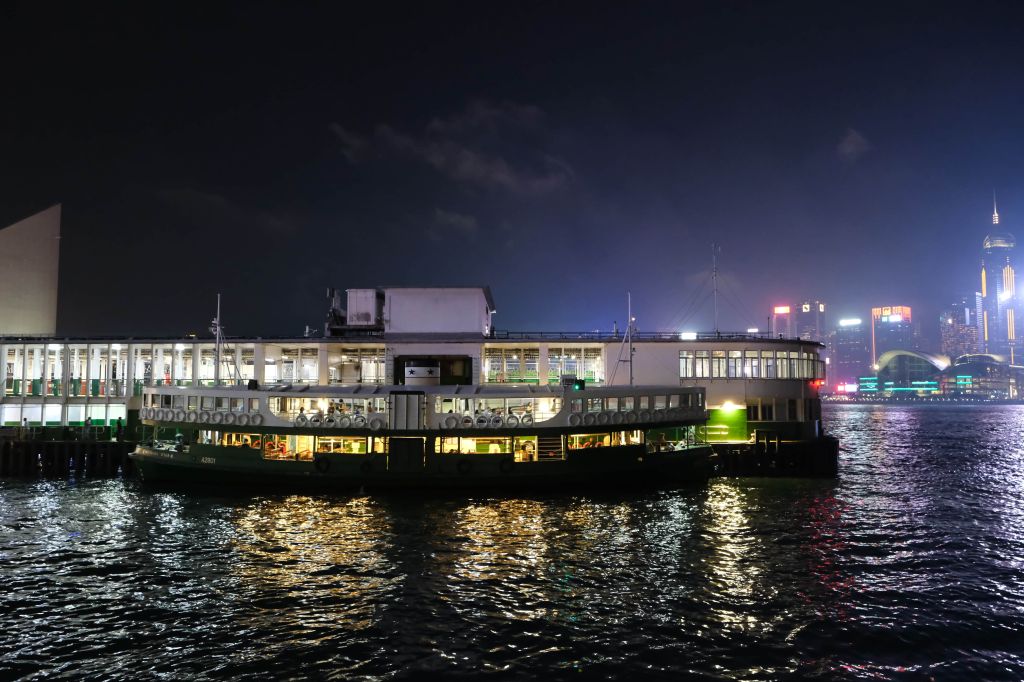
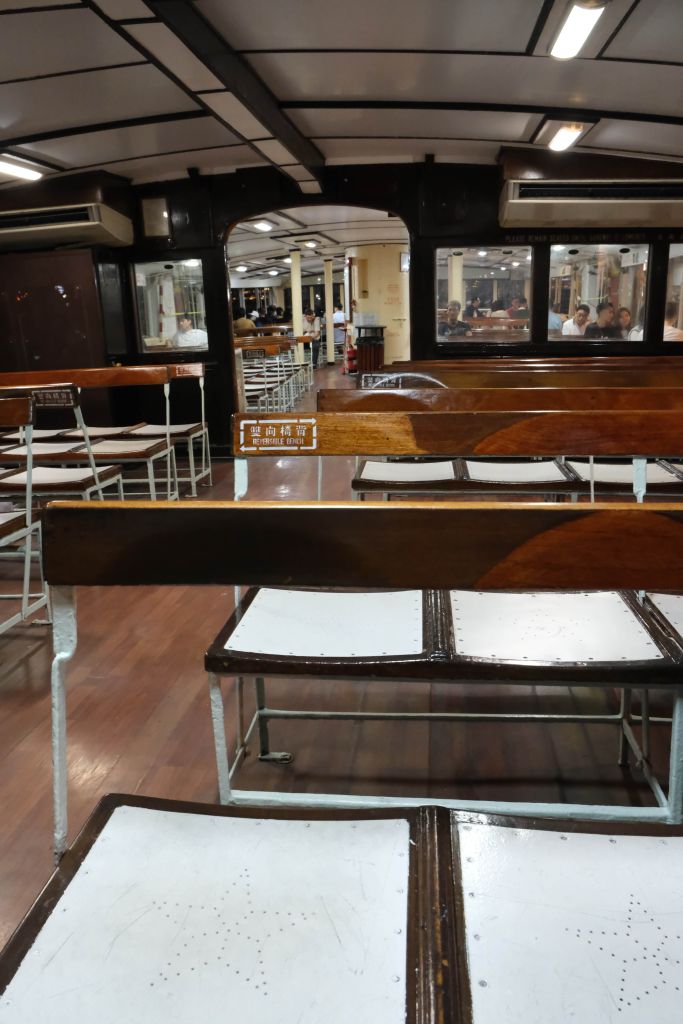
When you’re ready to leave Hong Kong Island to return to Kowloon, the most fun route is via ferry. Star Ferry has two routes connecting the Tsim Sha Tsui pier on the Kowloon side to two separate piers on the Hong Kong Island side. On Hong Kong Island, the ferry goes to either Wan Chai or Central. With slight variations between the two routes, ferry service operates frequently very 6-12 minutes from 6:30am to 11:30pm. Ferry fares are also very reasonably priced, costing less than USD$1 even on the weekend. The ferry offers superb views of the Hong Kong skyline and is a very easy must-do.


 RoxReels
Leave a comment